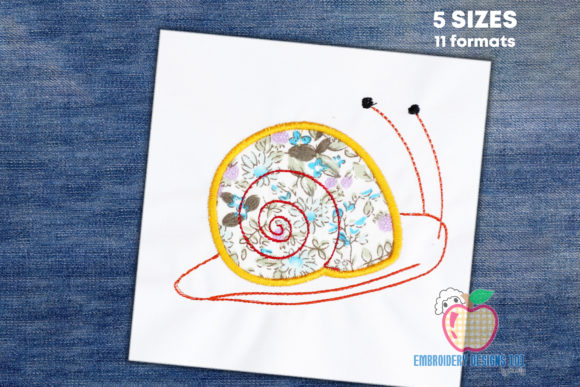
Review: Spiral Snail Walking Slowly Applique for Craft Fairs
As an embroidery designer who has spent countless weekends behind a craft fair table, I have learned that the difference between a browsing customer and a buying customer often comes down to immediate visual appeal. When I first loaded the Spiral Snail Walking Slowly Applique onto my machine, I was looking for more than just cute aesthetics; I was looking for a reliable craft fair product that could anchor a collection. This design, categorized under Bugs, offers a whimsical yet structured look that translates beautifully into tangible goods. In this review, I will break down how this machine embroidery design performs in real-world production scenarios, from tote bags to boutique patches.
First Impressions: Whimsy Meets Structure
The immediate vibe of the Spiral Snail Walking Slowly Applique is soft, decorative, and undeniably charming. It does not scream for attention with aggressive boldness; rather, it invites a closer look. The spiral element provides a geometric contrast to the organic shape of the snail, creating a balanced composition that feels both modern and rustic. For handmade shop owners, this duality is gold. It fits seamlessly into farmhouse-style kitchens, children’s nurseries, and eco-friendly market displays alike.
What stands out most is the clarity of the silhouette. In a busy booth environment, customers scan tables quickly. A design that is easily understood at a glance has a higher conversion rate. This snail design achieves that instant recognition. It is not overly complex, which means it retains its integrity even when viewed from a few feet away. For an Etsy seller or a local artisan, this visual immediacy is crucial for both physical displays and digital thumbnails.
Product Versatility and Application
The true test of any digital embroidery file is its versatility across different substrates. I evaluated the Spiral Snail Walking Slowly Applique on several common handmade product bases to determine where it shines brightest.
- Tote Bags and Market Bags: This is perhaps the strongest application. The design works exceptionally well as a central focal point on canvas totes. The applique technique reduces bulk, making the bag comfortable to carry while still providing a substantial visual impact. It transforms a plain utility item into a statement piece.
- Apron Embroidery: For kitchen-focused sellers, placing this design on the bib of an apron creates a delightful narrative. It suggests a slow, mindful approach to cooking and home life, which resonates deeply with current consumer trends favoring mindfulness and sustainability.
- Tea Towel Embroidery: Here, caution is required. While the design is lovely, the texture of waffle-weave or terry cloth towels can interfere with small details. However, because this is an applique design, the fabric fill covers the towel texture effectively, making it a viable option if stabilized correctly.
- Embroidered Patches: Cutting this design out as an iron-on or sew-on patch allows for immense flexibility. Customers love patches because they can customize their own jackets or backpacks. This design scales down surprisingly well for patch formats, provided the spiral details remain distinct.
- Caps and Headwear: Embroidering on curved surfaces requires careful hooping. The snail’s horizontal orientation works well on the front panel of a dad hat or baseball cap. It adds a touch of personality without overwhelming the small canvas.
Production Practicality for Small Shops
For creative entrepreneurs, time is money. The description notes that the Spiral Snail Walking Slowly Applique comes with multiple embroidery file formats compatible with various machines, and importantly, the steps are separated by color changes. This is a significant advantage for batch production. Color stops allow you to pause, trim threads, and switch colors efficiently, ensuring a clean finish without excessive jump stitches cluttering the back of the finished product.
When considering stitch density, applique designs are generally friendlier to production than full-fill satin stitch designs. They use less thread and run faster, which lowers your cost per unit. However, you must account for the time spent cutting the applique fabric. If you are producing fifty tote bags for a weekend market, pre-cutting your applique shapes using a die-cutter or laser cutter can streamline this process significantly.
Photography is another critical factor. This design photographs beautifully for online listings. The contrast between the applique fabric and the base garment creates natural depth, reducing the need for heavy editing in your printable mockup or final product photos. High-contrast images stop the scroll on social media, driving traffic to your shop.
Careful-Use Notes and Technical Considerations
While the design is robust, there are technical nuances to consider before launching your small shop product line. Always test the design on scrap fabric first. This is non-negotiable. You need to verify that the hoop size you intend to use accommodates the design with adequate margin for stability.
Fabric choice plays a pivotal role. On dark fabrics, ensure your thread colors provide sufficient contrast. If the snail outline blends into the background, the design loses its charm. Additionally, pay attention to the stabilizer. For stretchy fabrics like jersey tees or thin cottons, a cut-away stabilizer is recommended to prevent puckering around the applique edges. For woven fabrics like canvas or linen, a tear-away may suffice, but always check the back of your hoop after removal.
Be mindful of tiny details. If you scale the design down too much for small pouches or keychains, the spiral detail may lose clarity. The description mentions steps separated by color, which implies distinct sections. Ensure these sections remain visible at smaller sizes. If the spiral becomes a blob, the design fails. Stick to medium-to-large applications for the best results.
Enhancing Brand Consistency and Buyer Engagement
Incorporating the Spiral Snail Walking Slowly Applique into your lineup can strengthen your brand identity if you position it correctly. It speaks to a audience that values nature, slowness, and handmade quality. Use this narrative in your marketing. Describe the snail not just as a bug, but as a symbol of taking life one step at a time. This emotional connection increases perceived value and encourages buyer engagement.
For booth displays, use this design on items at varying price points. Offer a premium embroidered pillow cover for higher-ticket sales, and a simple patch for impulse buys. This tiered approach maximizes revenue per customer. Ensure your design assets, such as tags and packaging, reflect the same whimsical yet professional tone as the embroidery itself.
Final Designer Verdict
The Spiral Snail Walking Slowly Applique is a strong contender for any commercial embroidery portfolio focused on lifestyle and home goods. It balances aesthetic appeal with production efficiency. Before you commit to large-scale production, confirm the specific license terms included with your purchase. While many designers allow commercial use for finished physical products, restrictions on sharing the digital file itself are standard. Always read the fine print.
Check the included file formats to ensure compatibility with your specific machine software. Whether you are using Brother, Janome, Bernina, or Husqvarna, having the right format prevents conversion errors that can distort stitch paths. Once verified, this design offers a reliable, charming, and profitable addition to your craft fair inventory. It is a design that invites a smile, and in the world of handmade sales, a smile is often the first step toward a sale.