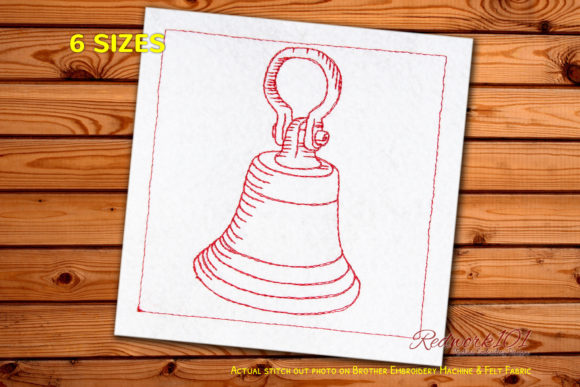
Brass Hanging Bell Redwork: A Designer’s Review
As an embroidery designer who has spent countless weekends behind a craft fair table, I have learned that not every machine embroidery design is created equal. Some designs look stunning on a computer screen but vanish into the fabric when stitched out. Others are so dense they pucker the material beyond repair. Today, I am putting Brass Hanging Bell Redwork under the microscope. I am evaluating it not just as a piece of digital art, but as a potential revenue generator for your small shop.
When I first loaded this embroidery file, my immediate impression was one of rustic elegance. The term "Redwork" traditionally refers to single-color stitching, often in red, on white or natural fabric. This style evokes a sense of heritage, farmhouse charm, and timeless simplicity. The "Brass Hanging Bell" motif suggests a decorative, perhaps festive or kitchen-centric theme. For a craft fair seller, this is gold. It appeals to buyers looking for handmade products that feel authentic rather than mass-produced. It does not scream for attention with neon threads; instead, it invites a closer look, which is exactly what you want when a customer is browsing your booth.
Visual Appeal and Market Positioning
In the context of Backgrounds and general Embroidery categories, this design stands out due to its clarity. Redwork relies heavily on line work and outline stitches. This means the design must be crisp. If the lines are jagged or the turns are clumsy, the entire aesthetic fails. Assuming the digitizing is clean, Brass Hanging Bell Redwork offers a high-contrast look that photographs beautifully. For an Etsy seller, this is crucial. Your main thumbnail needs to pop. A single-color design on a neutral linen background creates a sophisticated, minimalist image that performs well on social media and in online listings.
The mood here is versatile. It can lean festive if used during the holiday season, suggesting church bells or winter decor. Alternatively, it fits perfectly into a everyday kitchen narrative, suggesting a morning routine or a cozy home. This versatility allows you to market it year-round, though you may see spikes in interest during autumn and winter. As a craft fair product, it bridges the gap between traditional handicraft and modern minimalism.
Product Applications for Maximum Sales
Where should you stitch this? Not every item is a good canvas. Based on the likely scale and style of a bell motif, here is how I would deploy this design in a real-world booth setup.
- Tea Towel Embroidery: This is the number one recommendation. Redwork was historically popular on kitchen linens. Stitching this bell on a flour sack towel or a waffle-weave tea towel creates an instant bestseller. It is low-cost to produce, easy to gift-wrap, and appeals to a wide demographic.
- Tote Bag Design: A natural canvas tote with this design centered or placed in the corner looks chic. Ensure the hoop size is large enough to make the bell visible from a distance. Shoppers walking down the aisle need to see the design clearly.
- Apron Embroidery: Place the bell on the bib or the pocket. It adds a touch of personality to a functional item. Since aprons are often made of heavier cotton, the single-color stitching will lay flat without causing excessive bulk.
- Embroidered Patch: If the design is scaled down correctly, it makes a lovely iron-on patch. Patches are impulse buys at craft fairs. They allow customers to customize their own jackets or bags, increasing the perceived value of your small shop product.
- Pillow Covers: Use this as a central focal point on a linen pillow cover. The simplicity of redwork complements the texture of linen, creating a high-end look that justifies a higher price point.
Production Practicality and Batch Efficiency
For those of us running a business, time is money. One of the biggest advantages of redwork styles is the reduced thread changes. Since Brass Hanging Bell Redwork likely utilizes a single color for the main motif, you save significant time on trimming and re-threading. This makes it ideal for batch production. You can hoop ten tea towels, run the machine, and move on to the next step without constant supervision.
However, you must pay attention to stitch density. Even in outline work, if the digitizer has packed too many stitches into the curves of the bell, you risk needle breaks or thread bunching. Always check the preview in your software. If the design includes the optional "Box Stitch" mentioned in the description, evaluate whether it adds value or just extra sewing time. The description notes that the outer box color can be skipped if it is not part of the core design. I recommend skipping it unless you are specifically aiming for a framed look. Simplifying the design often leads to a cleaner, more professional finished product.
Careful-Use Notes and Technical Considerations
Before you commit to selling these items, there are technical hurdles to clear. Redwork is unforgiving. Because there is no fill to hide mistakes, every misaligned stitch is visible.
- Fabric Texture: Avoid highly textured fabrics like thick terry cloth for this specific design. The fine lines of the bell may get lost in the loops of the towel. Stick to smooth cottons, linens, or canvas.
- Dark Fabric: Redwork traditionally uses red thread on light fabric. If you attempt to stitch this on dark fabric, ensure you use a high-contrast thread color, such as white or gold. Do not assume red will show up on navy or black.
- Curved Surfaces: If applying this to caps, be cautious. The bell shape may distort on the curved front panel of a baseball cap. Use a strong cut-away stabilizer to prevent puckering, and consider resizing the design to fit the available space without crowding the seams.
- Small Lettering: If the design includes any text, inspect it closely. Small lettering in redwork can become illegible if the stitches are too thick. Zoom in to 400% in your viewer. If the letters look like blobs, do not sell it. Illegible text lowers the perceived quality of your commercial embroidery.
Designer’s Checklist for Success
To ensure Brass Hanging Bell Redwork becomes a staple in your inventory, follow this pre-production checklist. First, test the design on scrap fabric that matches your final product. Do not skip this step. Check the thread contrast; sometimes a darker shade of red reads better than a bright cherry red, depending on the lighting in your booth.
Review the spacing. Ensure there is enough breathing room around the bell so it does not feel cramped. Confirm the hoop size requirements. If the design is large, you may need a 5x7 or 6x10 hoop, which limits the types of machines your customers might need if you are selling the digital embroidery file itself. If you are selling finished goods, ensure your machine can handle the hoop size comfortably.
Create at least one real mockup. Take a photo of the stitched item in natural light. Compare it against your printable mockup or digital preview. Does the real life version match the expectation? If the digital file looks sharp but the stitch out looks messy, you need to adjust your tension or stabilizer. Finally, confirm commercial licensing. Ensure you have the right to sell items made with this design assets package. Most designers allow finished product sales, but always read the terms to protect your business.
In conclusion, Brass Hanging Bell Redwork has the potential to be a strong performer for handmade market products. Its strength lies in its simplicity and classic appeal. By choosing the right fabrics, optimizing for batch production, and paying attention to technical details like stabilizer and thread choice, you can turn this single design into a cohesive collection of bestsellers. Whether you are an experienced Etsy seller or a weekend warrior at the local farmers market, this design offers a blend of tradition and practicality that resonates with buyers seeking quality handmade goods.