Celebrate the New Year Redwork: A Designer’s Review
As a designer who has spent countless hours hooping fabric, testing tension, and troubleshooting thread breaks, I approach every new machine embroidery design with a mix of curiosity and skepticism. We have all been there: you download a file that looks crisp on the screen, only to find it puckers the fabric or loses its charm once stitched out. That is why I took a close look at Celebrate the New Year Redwork, not just as a digital asset, but as a practical tool for real-world production. This review is for the Etsy seller, the boutique owner, and the hobbyist who wants to know if this design will hold up in a commercial or personal embroidery project.
First Impressions and Visual Personality
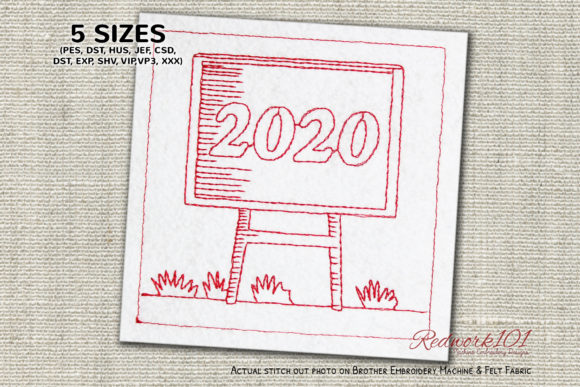
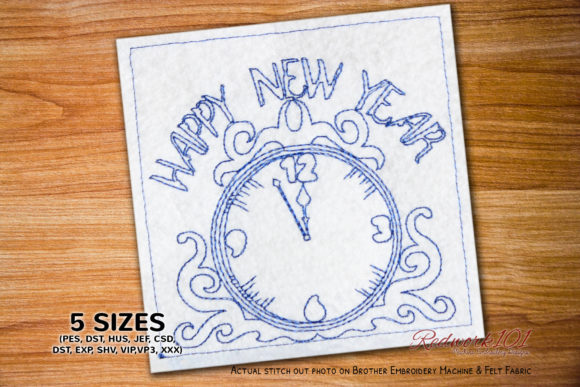
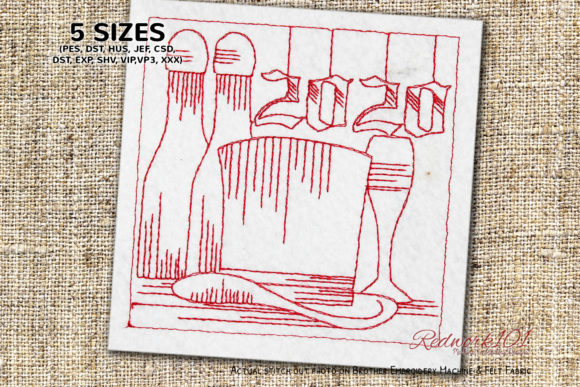
The immediate appeal of Celebrate the New Year Redwork lies in its simplicity. In an era where complex, multi-colored applique design files dominate the market, there is a refreshing honesty to redwork. The term traditionally refers to embroidery done in a single color, usually red, on a white or neutral background. This design captures that classic aesthetic while feeling modern enough for contemporary holiday decor. The lines are clean, suggesting a reliance on precise running stitch work rather than heavy fill stitch areas. This is crucial because it means the design remains lightweight and flexible, a key factor when working with garments that need to drape naturally.
The mood it creates is nostalgic yet celebratory. It does not scream for attention with neon threads or excessive density; instead, it invites a closer look. For a designer, this subtlety is a strength. It allows the texture of the fabric texture to shine through, creating a tactile experience that customers appreciate in high-end handmade product lines. Whether you are aiming for a rustic farmhouse vibe or a minimalist modern look, this design serves as a versatile anchor.
Real-World Application: From Hoop to Product
To truly evaluate an embroidery file, you must imagine it on a finished item. I visualized Celebrate the New Year Redwork on several common products to assess its viability. My primary test case was a natural linen tote bag design. Linen can be tricky due to its loose weave, but the open nature of redwork minimizes the risk of distortion. The design sat beautifully on the center panel, offering a sophisticated holiday touch that feels appropriate for January use, extending the life of the product beyond Christmas day.
I also considered its application in custom apparel, specifically a cream-colored cotton sweatshirt. Here, the sweatshirt embroidery potential is strong. Because the design likely avoids dense saturation, it prevents that stiff, cardboard-like feel that often plagues cheap promotional gear. The result is a soft, integrated look that enhances the garment rather than weighing it down. For baby embroidery projects, such as a muslin swaddle or a onesie, the lack of heavy backing requirements (provided you use the right stabilizer) makes it a safe and comfortable choice for sensitive skin.
For those running a craft business, versatility is currency. This design transitions well from home decor, like pillow covers or kitchen towels, to wearable items. It fits seamlessly into a small shop product lineup where consistency and quality are paramount. The "Backgrounds" category classification suggests it might be used as part of a larger composition, but standing alone, it has enough presence to be the focal point of a personalized gift.
Technical Considerations and Stitching Performance
While the aesthetic is promising, the technical execution requires attention to detail. The product description notes that "The Box Stitch shown in picture is optional." This is a critical piece of information for the operator. If you choose to include the outer box, you must ensure your hoop size accommodates it without encroaching on the clamp area. Skipping the box color, as suggested, can streamline the stitching process and reduce thread changes, which is a significant time-saver for high-volume commercial embroidery runs.
One must be mindful of stitch density. Redwork relies on the precision of individual stitches. If the digitizing is too sparse, the design may look flimsy; if too dense, it risks perforating delicate fabrics. I recommend testing the design on scrap fabric identical to your final material. Pay close attention to the corners and curves. In redwork, any jaggedness in a curve is immediately visible because there is no fill to hide imperfections. Ensure your machine is freshly cleaned and oiled, and use a sharp needle appropriate for your fabric type.
Fabric choice plays a pivotal role. On dark fabrics, traditional redwork may lose its contrast unless you opt for a bright thread color. However, the description mentions that the outer box color varies. This flexibility allows you to adapt the thread colors to suit different backgrounds. For a printed mockup or digital preview, try visualizing the design in black and white first. If it holds its integrity in monochrome, it will likely succeed in color. This is a good litmus test for the clarity of the digitizing.
Navigating Challenges: Where to Be Careful
No design is universal, and Celebrate the New Year Redwork has its limitations. Avoid using it on highly textured or fuzzy fabrics like heavy wool or terry cloth without a cut-away stabilizer, as the fine lines may get lost in the pile. Similarly, stretchy knits require careful stabilization to prevent the design from warping after washing. If you are applying this to an embroidered patch, ensure the base fabric is stable enough to support the stitching without additional heavy backing.
Curved surfaces, such as caps, present another challenge. The design’s layout must be centered perfectly, as any asymmetry is glaring in redwork. If the design includes tiny lettering or intricate details, verify that your machine can handle the resolution. Small shops often overlook this, leading to frustrated customers when details merge together. Always do a test stitch-out on the actual garment type before committing to a full production run.
Enhancing Brand Value and Customer Trust
From a business perspective, the quality of your design assets reflects directly on your brand. Using a well-digitized, thoughtful design like Celebrate the New Year Redwork signals professionalism. It shows that you care about the longevity and wearability of your finished product. Customers are increasingly educated; they can tell the difference between a mass-produced, stiff embroidery and a carefully crafted piece. This design supports the narrative of quality and care, which is essential for building customer trust and encouraging repeat business.
Furthermore, the timeless nature of redwork means the design does not feel dated quickly. Unlike trendy graphics that may fade in popularity, this style has enduring appeal. This makes it a safer investment for your digital embroidery file library. It can be reused season after season, perhaps with slight variations in thread color or placement, providing long-term value for your Etsy seller account or boutique inventory.
Final Verdict and Practical Advice
In conclusion, Celebrate the New Year Redwork is a solid addition to any designer’s toolkit, provided it is used with intention. It excels in applications where subtlety and fabric texture are celebrated. Before you begin, confirm the licensing terms. While many designs allow for commercial use of finished items, some restrict the resale of the digital file itself. Always clarify this to protect your craft business.
My advice is simple: test, adjust, and respect the fabric. Use a quality stabilizer, match your needle to your thread, and do not rush the hooping process. If you treat this design with the care it deserves, it will elevate your holiday embroidery collection and provide your customers with a beautiful, lasting keepsake. It is not just a pattern; it is a opportunity to showcase your skill and attention to detail in a crowded market.